
One of the first questions people ask when planning the Camino de Santiago is simple:
Where do you actually start the Camino?
The truth is, there isn’t just one answer.
The Camino is a network of pilgrimage routes across Europe, and technically you can begin almost anywhere and walk toward Santiago de Compostela, where the remains of Saint James are believed to rest.
Some people start right from their front door.
Others fly into Spain or Portugal and join one of the traditional starting towns.
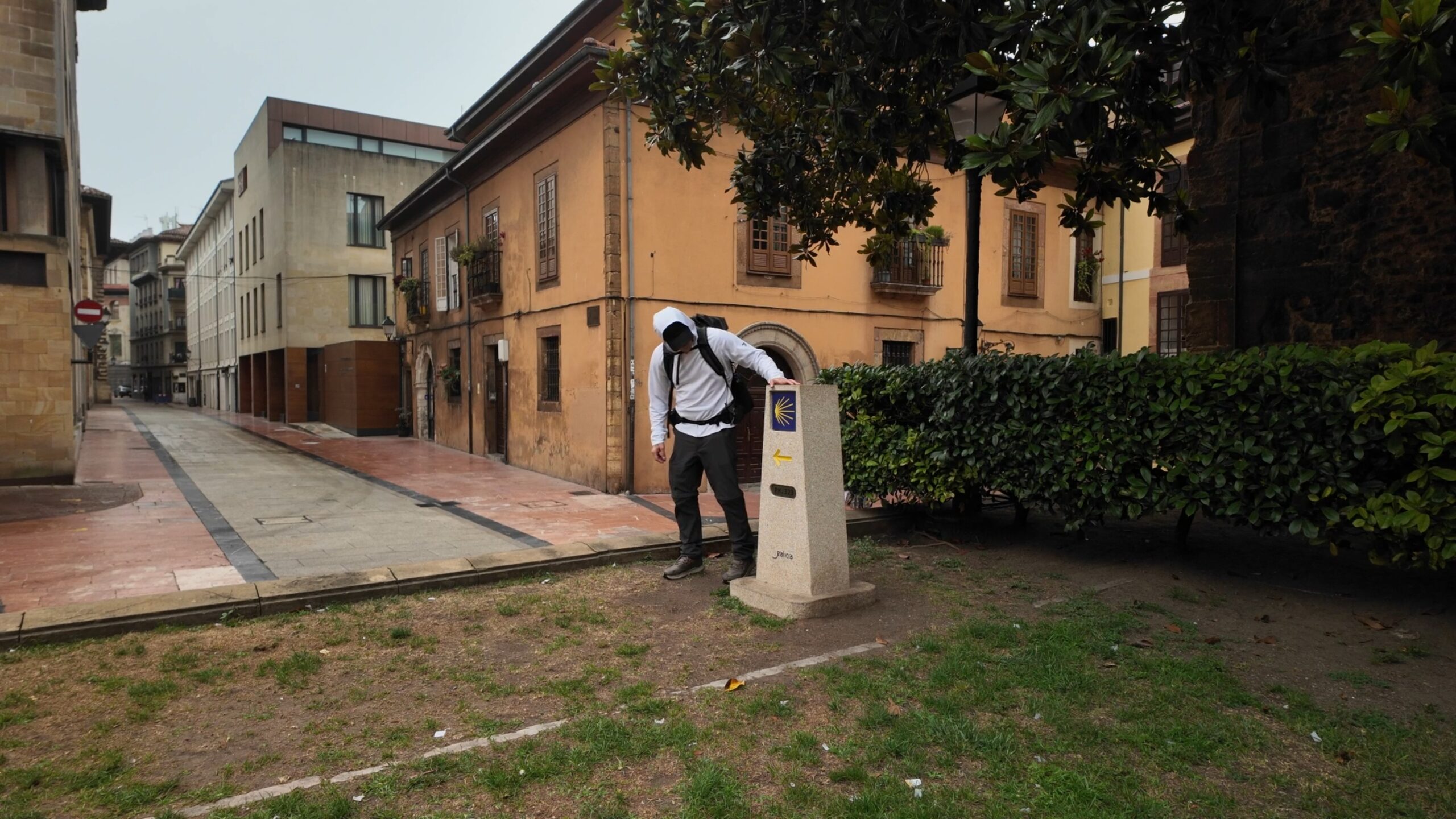
When I walked the Camino Primitivo, I started in Oviedo, which is one of the historic starting points of the route.
But across all Camino routes, some starting towns have become much more popular than others.
This guide covers 10 of the most common Camino starting points and what makes each one different.
A Quick Overview of the Camino de Santiago
The Camino de Santiago has existed for more than 1,000 years.
Pilgrims have walked these paths for many reasons:
- religious pilgrimage
- spiritual reflection
- adventure
- personal challenges
- life transitions
Today, the Camino is not a single trail but a network of routes across Europe, all leading to Santiago de Compostela in Galicia, Spain.
Along the way, pilgrims follow the famous yellow arrows and scallop shell symbols marking the route.
No matter which route you choose, the goal is the same:
arrive at the Cathedral of Santiago.
Camino Pilgrim Statistics (2025)
According to the Pilgrim’s Office in Santiago, more than 530,000 pilgrims received their Compostela certificate in 2025.
To receive the Compostela you must:
- walk at least 100 km (62 miles)
- collect two stamps per day in your pilgrim credential during the final stretch
Stamps can be collected at:
- churches
- cafés
- albergues
- accommodations
- pilgrim offices
Your credencial (pilgrim passport) often becomes one of the most meaningful souvenirs from the journey.
The Most Popular Camino Routes
Three Camino routes attract the majority of pilgrims:
Camino Francés
The classic route across northern Spain.
- ~45% of all pilgrims walk this route
- best infrastructure and services
- many starting towns
Camino Portugués
A route from Portugal into Spain.
- rapidly growing in popularity
- coastal and inland options
- often begins in Porto
Camino Inglés
A shorter route historically used by pilgrims arriving by boat from northern Europe.
Where Does the Camino de Santiago Start?
Technically, the Camino can start anywhere.
Many pilgrims believe:
The Camino begins the moment you step out your door.
But most modern pilgrims choose a starting point based on:
- available time
- difficulty of the route
- travel logistics
- how many kilometres they want to walk
Below are the 10 most common Camino starting points used today.
10 Popular Camino de Santiago Starting Points
1. Sarria (Camino Francés)
Sarria is by far the most popular starting point for the Camino.
Why?
Because it sits just over 100 km from Santiago, which is the minimum distance required to receive the Compostela certificate.
Distance to Santiago: ~117 km
Typical walking time: 5 days
Pros:
- excellent pilgrim infrastructure
- many albergues and services
- easy access by train or bus
Cons:
-
very busy during peak season
2. Porto, Portugal (Camino Portugués)
Porto is one of the most popular starting points for the Portuguese Camino.
From Porto you can choose multiple route options:
- Coastal route
- Litoral route
- Central inland route
Distance to Santiago: ~250 km
Typical walking time: 10–14 days
Many pilgrims love this route for its coastal scenery and charming Portuguese towns.
3. Saint-Jean-Pied-de-Port (Camino Francés)
This small French town is the traditional starting point of the full Camino Francés.
Pilgrims begin by crossing the Pyrenees Mountains into Spain, one of the most memorable stages of the entire Camino.
Distance to Santiago: ~780 km
Typical walking time: 30–35 days
This is the classic Camino experience.
4. Oviedo (Camino Primitivo)
Oviedo is where the Camino Primitivo begins.
This was actually the original Camino route, walked by King Alfonso II in the 9th century.
It’s also where I started my own Camino.
The Primitivo is known for:
- stunning mountain scenery
- fewer crowds
- a more rugged experience
Distance to Santiago: ~320 km
Typical walking time: 12–14 days
Many pilgrims consider it the most beautiful Camino route.
5. Tui (Camino Portugués)
Tui sits just across the Spanish border from Portugal.
It’s a common starting point for people who want a shorter Camino but still enough distance to feel like a real pilgrimage.
Distance to Santiago: ~120 km
Typical walking time: 5–6 days
This section of the Portuguese Camino is very scenic and manageable.
6. León (Camino Francés)
León is a historic Spanish city and a popular mid-route starting point on the Camino Francés.
Many pilgrims begin here if they want a 2-week Camino experience instead of walking the entire route.
Distance to Santiago: ~300 km
Typical walking time: 12–14 days
7. Ferrol (Camino Inglés)
Ferrol is the starting point of the Camino Inglés, one of the shorter Camino routes.
Historically, pilgrims from England and Scandinavia arrived here by ship.
Distance to Santiago: ~118 km
Typical walking time: 5 days
8. Lugo (Camino Primitivo)
Lugo is a common starting point for people walking the final section of the Camino Primitivo.
The city is famous for its Roman walls, which completely surround the historic center.
Distance to Santiago: ~100 km
Typical walking time: 5 days
9. Astorga (Camino Francés)
Astorga is another popular mid-route start on the Camino Francés.
It’s known for:
- a stunning cathedral
- Gaudí’s Episcopal Palace
- access to the mountains near Cruz de Ferro
Distance to Santiago: ~260 km
Typical walking time: 10–12 days
10. Pamplona (Camino Francés)
Pamplona is famous for the Running of the Bulls, but it’s also a common Camino starting point.
Pilgrims begin here if they want to skip the Pyrenees crossing but still walk a large section of the route.
Distance to Santiago: ~700 km
Choosing the Right Camino Starting Point
The best starting point depends on a few things:
- how many days you have
- the difficulty you want
- how crowded you want the route to be
- travel logistics
For example:
If you want the classic Camino experience, start in Saint-Jean-Pied-de-Port.
If you want something quieter and more rugged, try the Camino Primitivo from Oviedo.
If you only have a week, Sarria or Tui are common starting points.
Final Thoughts
The Camino doesn’t have one official beginning.
Some pilgrims start in France.
Others start in Portugal.
Some start just 100 kilometres away.
What matters most isn’t where you begin.
It’s the journey itself.
Buen Camino.